Page History

26 Years of Lululemon.com: Every Change From Yoga Studio to $10B Empire

We tracked every Wayback Machine snapshot of lululemon.com from 1999 to 2025 — explore any year and see how a Vancouver yoga studio iterated its way to a $10 billion athletic empire.

Data as of March 20, 2026 3 platform eras 26 years tracked
Listen to this article
0:00 / 0:00
26
Years tracked
447
Wayback snapshots
40+
Tools detected
$10.6B
FY2024 Revenue

Why Track How Brands Rebuild Their Websites?

Lululemon is one of only a handful of athletic apparel brands to cross $10 billion in annual revenue. Their homepage tells a 26-year story of strategic evolution — from a brochure page for a single Vancouver yoga studio to an enterprise-grade ecommerce platform serving 767 stores across 29 countries. Every major platform shift correlated with a leadership change, a revenue milestone, or a crisis that forced reinvention:

447

The Wayback Machine captured 447 snapshots of lululemon.com since 1999 — one of the longest continuous ecommerce archives in athletic apparel. Peak archival activity hit 89 captures in 2010 alone, during Lululemon's explosive North American expansion.

$500M

Lululemon's $500 million Mirror acquisition in 2020 was written down to near zero by 2023. The failed bet on at-home fitness reshaped their digital strategy entirely — proving that the most expensive website decisions aren't always about the platform itself, but about what you build on top of it.

Source: CNBC
$10.6B

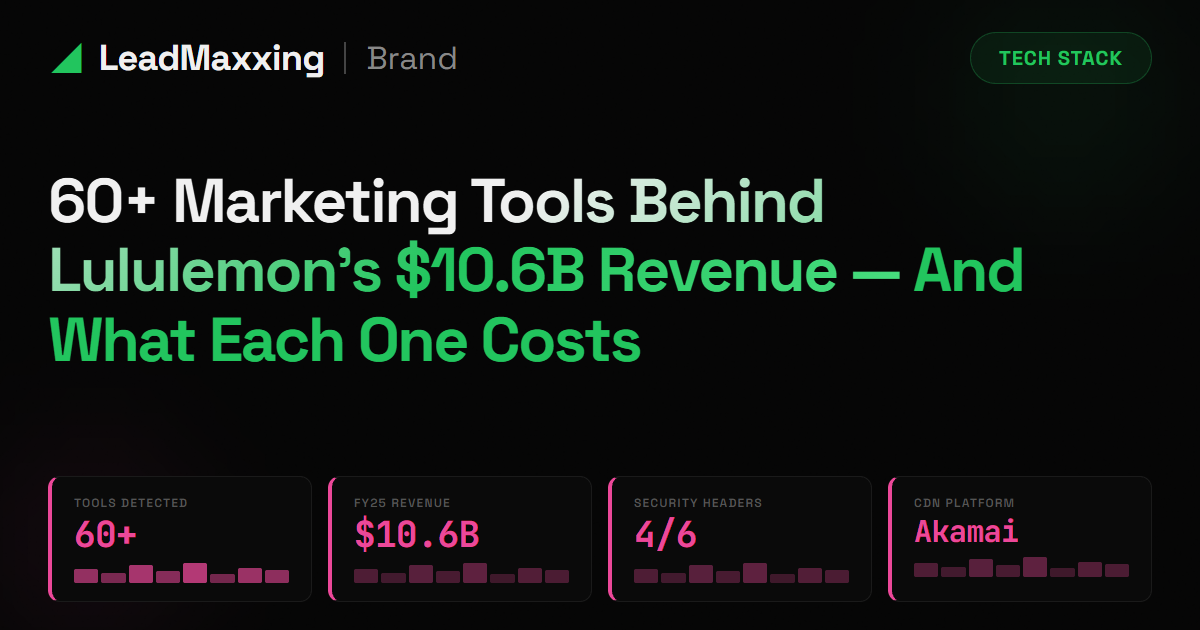
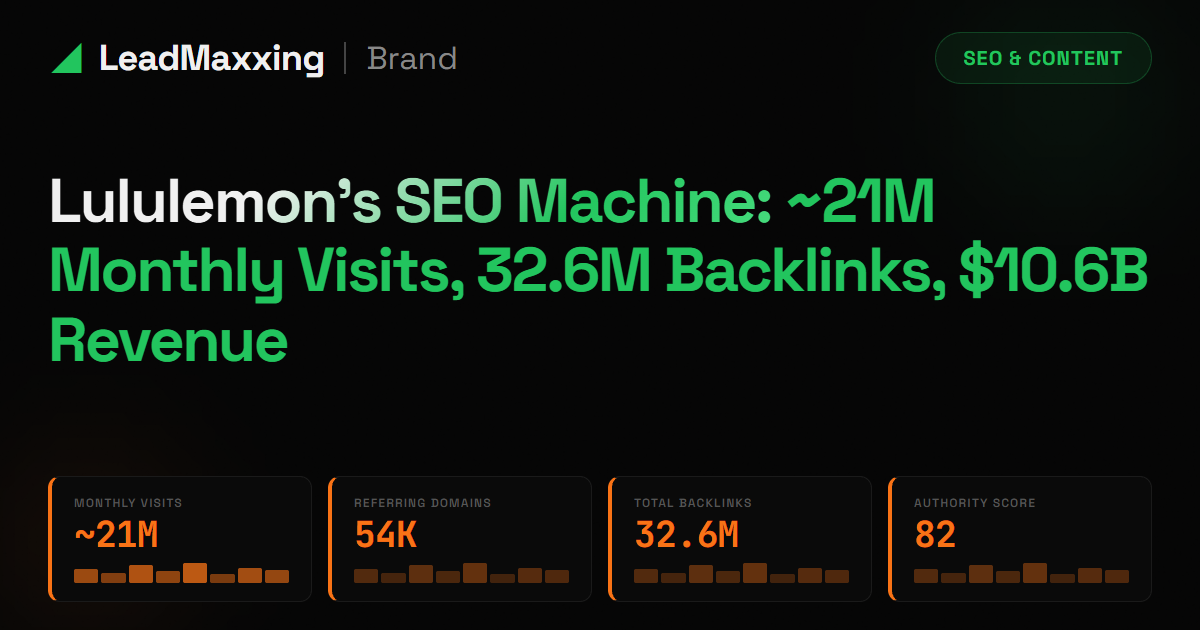
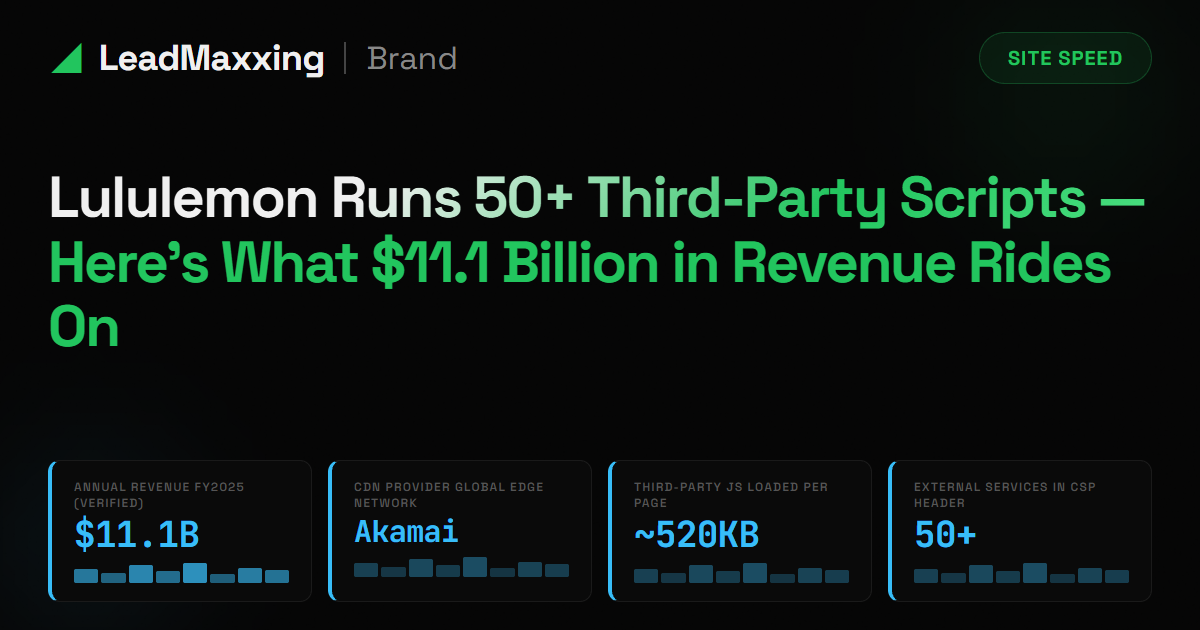
Lululemon crossed $10 billion in annual revenue in fiscal 2024 (ended February 2025), a milestone only Nike and Adidas had previously achieved in athletic apparel. Their Oracle Commerce platform, Akamai CDN, and 40+ marketing tools power this scale — a tech stack that's closer to Nike than typical DTC brands.

Explore Any Year
Click a year to load the archived homepage
Loading lululemon.com from the Wayback Machine…
2005 — Pre-IPO growth. Lululemon is expanding across Canada with 20+ stores. The website is a brochure site with store locator, community events, and product info. Ecommerce hasn't launched yet.
Open on Wayback Machine — January 2005

Three Platform Eras

How Lululemon evolved from brochure site to enterprise commerce in 26 years

Unlike DTC brands that launch online-first, Lululemon was a physical retailer for nearly a decade before launching ecommerce in 2009. Their website evolution reflects three distinct eras, each driven by leadership changes and revenue milestones. Their current tech stack spans 40+ enterprise tools, from Oracle Commerce to Akamai CDN.

Brochure & Community
$0–$275M
1999–2008
  • StackStatic HTML
  • Stores~80
  • StrategyStore locator
Ecommerce Launch
$1B+
2009–2017
  • StackATG Commerce
  • ShiftOnline sales
  • StrategyOmnichannel
Enterprise Scale
$10.6B
2018–2026
  • StackOracle + Akamai
  • Tools40+
  • StrategyPersonalization

The Full Timeline

Every major homepage change from 1999 to 2025

1998-99
Chip Wilson founds Lululemon in Vancouver. The first website is a minimal brochure page — a design studio by day, yoga studio by night. First Wayback Machine capture: October 13, 1999. Founded
2000-04
First standalone store opens in Kitsilano, Vancouver (November 2000). The website serves as a store locator and community events page. No ecommerce — all sales happen in-store. The brand grows to 20+ locations across Canada through grassroots yoga community marketing.
2005-06
Rapid Canadian expansion. Robert Meers joins as CEO to professionalize operations. Website gets a visual refresh with product imagery and lifestyle photography, but still no shopping cart. 32 Wayback snapshots captured in 2005 alone — the most active year until the ecommerce era.
2007
IPO on NASDAQ at $18/share. Raises $327.6 million. Shares jump 56% on day one. Christine Day takes over as CEO in 2008, inheriting a website that still can't sell products online — a glaring gap for a newly public company. IPO
2009
Ecommerce finally launches (April 2009). Nine years after the first physical store. Built on ATG Web Commerce (later acquired by Oracle). Homepage transforms from brochure to full shopping experience. 80 Wayback snapshots this year as the site evolves rapidly. Online sales become a major revenue channel. E-commerce launch
2010-12
Peak homepage iteration. 89 Wayback captures in 2010 alone. International expansion to Australia, New Zealand, and the UK. Homepage rotates seasonal campaigns, new product categories (men's line), and community content. Revenue crosses $1 billion by 2012.
2013
The sheer yoga pants crisis. Lululemon recalls ~17% of women's black Luon pants for being too sheer. CEO Christine Day departs. Founder Chip Wilson makes controversial public comments and later resigns as chairman. The homepage becomes a crisis management tool — product messaging shifts to quality and transparency. Crisis
2014-17
Brand recovery under Laurent Potdevin. Homepage evolves from product-focused to lifestyle-driven — yoga, run, train categories get dedicated landing pages. The athleisure boom drives revenue growth. Social media integration appears on the homepage for the first time.
2018-19
Calvin McDonald era begins. Former Sephora president takes over as CEO. Announces "Power of Three" growth strategy: product innovation, guest experience, market expansion. Homepage reflects men's category push and international expansion. Paid media investment scales across platforms. New CEO
2020
COVID pivot & Mirror acquisition ($500M). Ecommerce revenue more than doubles during lockdowns. Homepage integrates Mirror connected fitness content. Lululemon bets big on at-home workouts — a bet that would later unravel. Digital-first CRM intensifies. Mirror acquired
2022-23
"Power of Three x2" and Mirror wind-down. New growth plan targets $12.5B by FY2026. Mirror is quietly written down to near zero. Homepage strips Mirror branding and refocuses on core apparel. Contentful CMS powers dynamic content. Kameleoon handles A/B testing at scale.
2024-25
$10B+ revenue and global expansion. 767 stores globally. Entering 6 new markets (Greece, Austria, Poland, Hungary, Romania, India). CEO Calvin McDonald departs January 2026. Current stack: Oracle Commerce, Akamai CDN, Contentful CMS, 40+ marketing tools. See the full tech stack →

Key Findings

  • → Lululemon waited 9 years after opening their first store to launch ecommerce in 2009 — an unusually late digital entry for a brand that would eventually generate $10.6 billion in annual revenue (verified: Lululemon FY2024 earnings).
  • → The Wayback Machine captured 447 snapshots of lululemon.com since 1999, with peak activity of 89 captures in 2010 during their North American expansion phase.
  • → Lululemon's $500 million Mirror acquisition in 2020 was written down to near zero by 2023, making it one of the most expensive failed digital bets in retail history (verified: CNBC).
  • → CSP header analysis reveals 40+ third-party tools on lululemon.com, spanning advertising pixels from 12+ platforms, Salesforce Interaction Studio for personalization, and Kameleoon for A/B testing.
  • → Every major homepage evolution correlated with a CEO transition — 4 different leaders in 20 years each reshaped lululemon.com's strategy, from brochure to omnichannel to personalization.

What This Data Means for You

Turning Lululemon's evolution into your competitive advantage

Lululemon's 26-year website history is a masterclass in strategic patience and expensive mistakes. They proved that launching ecommerce "late" doesn't disqualify you from winning — but the pricing and positioning have to be right. Their Mirror acquisition showed that even $10B brands can make $500M mistakes when they chase trends instead of optimizing what works. Meanwhile, their tracking infrastructure and site performance tell the story of a brand that invests heavily in the invisible layer beneath the homepage.

LeadMaxxing Automates This Entire Playbook

Lululemon has a team of engineers and marketers iterating their homepage across 29 countries. LeadMaxxing gives you the same capability without the headcount. Our AI scrapes competitor homepages, generates landing page variants from real data, and runs A/B tests that auto-apply winners at 95% statistical significance. What Lululemon does with 40+ tools, LeadMaxxing does for $29/month.

Try autonomous A/B testing →

5 Things You Can Implement Today

Actionable lessons from Lululemon's homepage playbook

Don't wait 9 years to sell online

Lululemon's late ecommerce launch left billions on the table. If you have a physical product, your homepage should be a conversion engine from day one. LeadMaxxing auto-generates optimized landing pages from your product data — no dev team required.

Treat CEO transitions as homepage strategy resets

Every Lululemon CEO reshaped the homepage. Use leadership changes or strategic pivots as triggers to audit and refresh your homepage messaging. LeadMaxxing tracks competitor homepage changes automatically so you never miss a strategic shift.

Test before you acquire

Lululemon spent $500M on Mirror before validating demand. A/B test new product categories on your homepage before committing capital. LeadMaxxing runs autonomous tests on variant pages — winners auto-apply at 95% significance.

Invest in the invisible layer

Lululemon's 40+ tools are invisible to visitors but power every conversion. Your personalization, analytics, and testing infrastructure matters more than the hero image. LeadMaxxing gives you enterprise-grade visitor tracking and lead scoring out of the box.

Supercharge Your Leads with LeadMaxxing

Get a free LeadMaxxing account and start supercharging your leads. Start free →

Free — No credit card required

Get This Analysis For Your Brand FREE
When You Create A Free LeadMaxxing Account

Create a free LeadMaxxing account and we'll generate a full competitive analysis for YOUR brand. The same intelligence you just read — comparison with competitors, actionable strategies, and AI-powered recommendations.

Auto-generated brand report Competitor comparison Strategy recommendations AI-powered insights Free LeadMaxxing account to supercharge your leads
Get Free Report + Account → Free plan includes visitor tracking, lead scoring, and AI chat. Paid plan $29/month for full access.

Frequently Asked Questions

What platform does Lululemon use for their website in 2026?
As of 2026, Lululemon runs on Oracle Commerce (formerly ATG Web Commerce) with Akamai as their CDN. Their CNAME record points to lululemon.com.edgekey.net, confirming Akamai's edge network. They use Contentful as a headless CMS, Kameleoon for A/B testing, LaunchDarkly for feature flags, and over 40 third-party marketing and analytics tools detected via CSP header analysis.
When did Lululemon launch their ecommerce website?
Lululemon's first Wayback Machine capture dates to October 13, 1999, but the site was initially a brochure-style page for their Vancouver yoga studio. Full ecommerce launched in April 2009, roughly 9 years after the first physical store opened in Kitsilano, Vancouver in 2000.
How much revenue does Lululemon generate annually?
Lululemon reported $10.59 billion in net revenue for fiscal year 2024 (ended February 2, 2025), a 10% increase year-over-year. This made them one of only a handful of athletic apparel brands to cross the $10 billion threshold. They operate 767 stores globally as of early 2025.
What happened with Lululemon's Mirror acquisition?
Lululemon acquired Mirror, a home fitness company, for $500 million in July 2020 during the COVID-19 pandemic. The acquisition was intended to expand their digital fitness offerings. However, by 2023 the investment was written down to near zero as demand for at-home fitness equipment declined post-pandemic, making it one of the most notable failed acquisitions in retail.
How many tools does Lululemon use on their website?
Based on CSP header analysis of lululemon.com, we detected over 40 third-party tools spanning advertising (Meta, Pinterest, Snapchat, TikTok, Google Ads, Reddit, Amazon), analytics (Google Analytics, Datadog, Quantum Metric), personalization (Salesforce Interaction Studio), payments (Klarna, Afterpay, PayPal, Braintree), and customer service (Oracle Service Cloud, Quiq, Salesforce).
What is Lululemon's Power of Three growth strategy?
Lululemon's "Power of Three x2" strategy, announced in 2022, targets $12.5 billion in revenue by fiscal year 2026. The three pillars are: doubling men's revenue, doubling digital revenue, and quadrupling international revenue compared to 2021 levels. The original "Power of Three" plan was introduced in 2019 under CEO Calvin McDonald.
How does Lululemon's tech stack compare to other athletic brands?
Lululemon's Oracle Commerce platform is more enterprise-grade than most DTC competitors who typically run Shopify Plus. Their stack includes Akamai CDN (vs CloudFront or Fastly), Contentful headless CMS, Kameleoon for testing, and LaunchDarkly for feature flags. The closest comparison in complexity is Nike's custom platform rather than typical DTC setups.
When did Lululemon go public and what was their IPO price?
Lululemon went public on July 27, 2007 on the NASDAQ Global Select Market under ticker LULU. The IPO was priced at $18 per share, raising $327.6 million. Shares jumped 56% on day one. As of March 2026, the company's market capitalization is approximately $17.7 billion.

Sources & References

Wayback Machine / Internet Archive — 447 archived snapshots of lululemon.com from 1999 to 2025, used to reconstruct the full homepage evolution timeline.
web.archive.org
Lululemon FY2024 Earnings Release — Official financial results confirming $10.59 billion revenue, $1.814 billion net income, and 767 global store count.
corporate.lululemon.com
CNBC — Mirror Acquisition — Reporting on Lululemon's $500 million acquisition of home fitness company Mirror in July 2020.
cnbc.com
Lululemon Power of Three x2 Strategy — Official announcement of the five-year growth plan targeting $12.5B revenue by FY2026.
corporate.lululemon.com
BuiltWith Technology Profile — Technology stack tracking for lululemon.com, including platform identification, marketing tools, and third-party services.
builtwith.com
MacroTrends — Revenue History — Historical revenue data for Lululemon Athletica from 2012 to 2025, sourced from SEC filings.
macrotrends.net
SGB Media — IPO Coverage — Original reporting on Lululemon's July 2007 NASDAQ IPO at $18/share and 56% first-day jump.
sgbonline.com
Compiled by LeadMaxxing using Wayback Machine data. We track how brands build, test, and optimize their marketing.