Gymshark's Pricing Strategy: How They Position Against Nike, Lululemon, and Fast Fashion
1,000+ SKUs scraped and mapped against Nike, Lululemon, Under Armour, and H&M — category breakdowns, discount patterns, and market positioning.
First: Why Should You Care About Pricing Intelligence?
Pricing is the single highest-leverage decision in DTC — and most brands get it wrong
Because pricing is the most powerful and least understood lever in DTC. A 1% price improvement yields an average 11% profit increase, according to McKinsey. Yet most brands set prices once and forget them. Gymshark is the counter-example — they treat pricing as an ongoing competitive discipline, not a one-time spreadsheet exercise. Their deliberate sweet spot (premium enough for margin, accessible enough for volume) didn't happen by accident. It happened because they study the market constantly. Here's what that discipline looks like in practice:
Gymshark undercuts Lululemon by 40-60% on comparable products. Core leggings at $38-$60 vs. $88-$128. This isn't a race to the bottom — it's a calculated positioning that captures the 18-30 demographic Lululemon prices out.
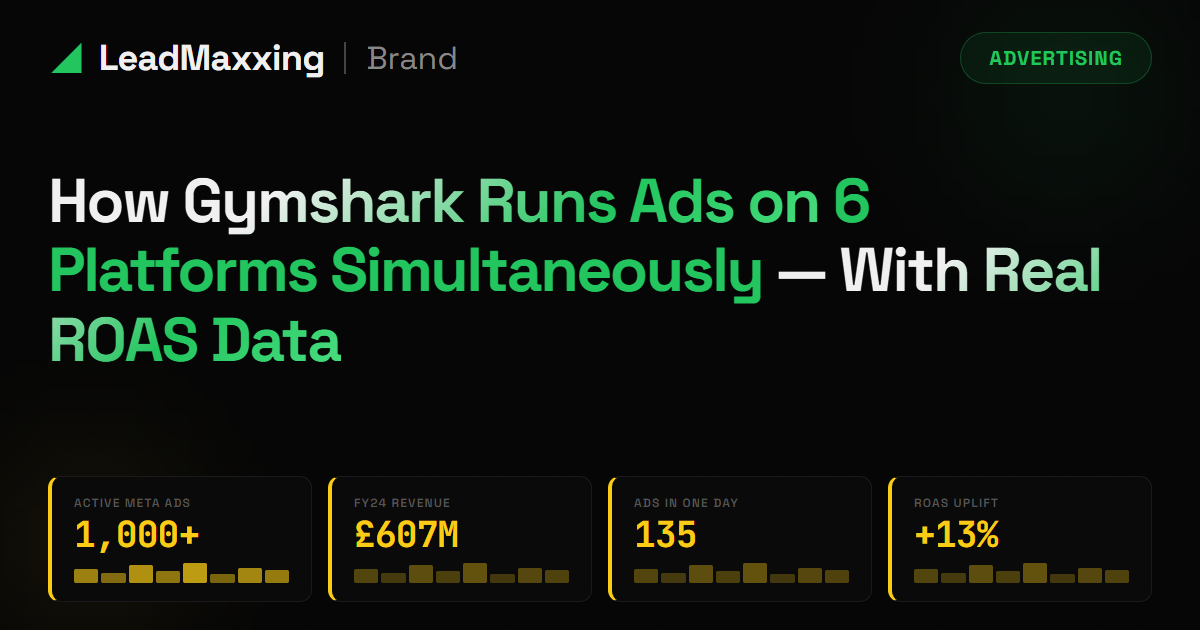
FashionUnited reported Gymshark hit £607M revenue in FY24 with 100% DTC distribution. No wholesale, no department stores, no marketplace middlemen. Every sale goes through their own channels at full margin, backed by a 60+ tool tech stack purpose-built for DTC conversion.
Gymshark charges 2x the price of H&M activewear for comparable products. The perceived quality gap — built through community, influencers, and brand positioning — lets them charge a premium over fast fashion without competing on price with luxury.
Gymshark
Lululemon
Nike
H&M
Price Range Analysis
How Gymshark clusters 1,000+ SKUs into a tight $26–$68 band
Gymshark's sweet spot is $28–$60. That's where the vast majority of their 1,000+ product catalog clusters. The median product price sits around $40 — making it accessible enough for college students but not so cheap that it feels disposable.
Compare that to Lululemon, where the entry point for leggings is $88 and the median product price sits above $100. Or Nike, where performance lines start at $50 but quickly climb past $120. Gymshark found the gap — premium enough to signal quality, cheap enough that you don't think twice.
Source: gymshark.com full catalog scrape, March 2026. Percentages represent share of total SKUs in each price band.
87% of Gymshark products fall between $26 and $60. This tight clustering is intentional — it keeps the brand anchored in the "accessible premium" zone. They don't have a $120 jacket pulling the average up or a $8 clearance bin dragging it down.
This is exactly the kind of pricing intelligence LeadMaxxing generates automatically. Our AI scrapes competitor catalogs, maps price bands, and flags when competitors adjust strategy — see how it works →
Category Breakdown
Leggings, sports bras, shorts, tops, and hoodies mapped by price
Leggings are the hero product. They're the highest-priced core category, anchoring at $38–$60, and they're also where Gymshark's brand perception lives. Premium leggings → premium brand → everything else gets a halo effect.
| Category | Price Range | Core Price | Top Seller Example |
|---|---|---|---|
| Leggings | $38 – $60 | $60 | Adapt Animal X Whitney Leggings |
| Sports Bras | $26 – $44 | $34 | Lift Seamless Sports Bra |
| Shorts | $30 – $48 | $44 | Running 2-in-1 Shorts |
| Tops & Tanks | $28 – $44 | $30 | Training Oversized T-Shirt |
| Hoodies | $42 – $50 | $50 | Power Washed Oversized Hoodie |
| Joggers | $42 – $68 | $42 | Training Fleece Straight Leg Joggers |
The "Everyday Seamless" line is the volume play. At $26–$38, it's the gateway drug. A customer buys an Everyday Seamless racerback bra at $26, likes it, then upgrades to a $60 Adapt Animal legging. Classic price ladder.
Notice the tight range within categories. Leggings don't span $20–$100 like Nike. The floor is $38, the ceiling is $60. That consistency is what builds trust. Customers know what they're getting before they even click.
A full Gymshark outfit (leggings + sports bra + top) costs $90–$130. That's the price of one pair of Lululemon Align leggings. This is Gymshark's core value proposition distilled into a single comparison.
Most DTC brands guess at category pricing. LeadMaxxing tracks your competitors' catalogs daily, flagging new products, price changes, and category shifts before you notice them manually — start free →
Competitor Price Mapping
Gymshark vs Lululemon, Nike, Under Armour, and H&M across every category
Gymshark sits squarely between fast fashion and premium. They undercut Lululemon by 40–60%, match or beat Nike on most categories, position slightly above Under Armour's basics, and charge roughly 2x what H&M does. That's the sweet spot.
| Category | Gymshark | Lululemon | Nike | Under Armour | H&M |
|---|---|---|---|---|---|
| Leggings | $38–$60 | $88–$128 | $50–$110 | $45–$80 | $15–$30 |
| Sports Bras | $26–$44 | $48–$68 | $30–$55 | $25–$50 | $10–$20 |
| Shorts | $30–$48 | $58–$88 | $35–$65 | $30–$50 | $12–$25 |
| Hoodies | $42–$50 | $98–$128 | $55–$120 | $50–$80 | $20–$35 |
| Full Outfit* | $90–$130 | $200–$320 | $120–$250 | $100–$180 | $40–$80 |
*Full outfit = leggings + sports bra + top. Source: Product page scrapes of gymshark.com, lululemon.com, nike.com, underarmour.com, hm.com. March 2026.
The Lululemon gap is massive. A pair of Lululemon Wunder Train leggings costs $98 at minimum. Gymshark's Lift Seamless — arguably their closest equivalent in compression and fabric tech — is $60. That's a 39% discount for a product that Gen Z consumers often rate as comparable quality on social media.
Nike is the most interesting competitor. Their price range is enormous ($50–$150 for leggings alone), which means Gymshark can cherry-pick the comparison. At the high end, Gymshark is half the price. At the low end, they're within $10. But Gymshark's consistency — you always know what you'll pay — is the real differentiator.
Track Competitor Pricing Automatically
LeadMaxxing monitors competitor product pages, detects price changes, and alerts you when competitors adjust their strategy. The same intelligence shown above — updated daily, for your brand.
Start free →Discount Strategy
3–4 events per year, scarcity-driven drops, and the Blackout playbook
Gymshark doesn't do constant sales. That's the whole point. They run 3–4 major sale events per year, make them feel like cultural moments, and protect full-price perception the rest of the time. It's the Supreme model applied to gym clothes.
Black Friday
Summer Sale
Mid-Season
Student Discount
Annual Discount Calendar
Before Black Friday, Gymshark deletes every post from their social accounts. Instagram goes dark. TikTok goes silent. Then the sale drops. This unconventional tactic generates massive earned media coverage and FOMO. In 2022, this strategy reportedly helped generate tens of millions in Black Friday weekend revenue alone — supported by their email and CRM flows that warm up subscribers weeks before launch.
Limited Drops: The Scarcity Engine
Beyond sales, Gymshark weaponizes scarcity. They release products in limited runs that sell out fast and rarely restock — amplified by their social media playbook. This is the streetwear model — Supreme, Yeezy, Off-White — applied to gym leggings.
Gymshark regularly releases exclusive colorways available only to loyalty program members. Teaser workouts and fit-checks from their athlete network on TikTok and Reels drive followers to loyalty-gated landing pages, and these limited drops frequently sell out within hours.
The origin story is telling. At an early Toronto fitness expo, Gymshark sold 90% of inventory on day one. Day two saw even higher demand — because the near-sellout turned remaining items into "exclusives." They've engineered that accident into a repeatable strategy ever since.
Market Positioning
Where Gymshark sits on the premium-to-value spectrum and why it works
Gymshark occupies the most profitable niche in activewear: "premium but accessible." They're not competing with Lululemon on quality or Nike on heritage. They're competing on identity. Gymshark is the brand for people who take the gym seriously but aren't willing to pay Lululemon prices to prove it.
Source: Product page scrapes of gymshark.com, lululemon.com, nike.com, underarmour.com, hm.com. March 2026. Full outfit = leggings + sports bra + top.
The Positioning Playbook
Target Audience
Revenue (FY24)
Valuation
DTC Only
Gymshark's brand positioning rests on four pillars, according to brand analysis from Labbrand:
- Truth: "Unlock the Limit in Everyone" — functional gym wear at £20–30 designed to boost physical comfort and mental confidence
- Vision: "Be all that you imagine you could be" — collaborations with athletes and influencers who embody personal transformation
- Universe: The "Gymshark family" — an inclusive fitness community built through social media engagement and user-generated content
- Personality: "Fearless with Unlimited Possibilities" — bold public stances on social causes (BLM, NHS donations) and playful brand voice
Gymshark doesn't compete on product — they compete on community. Their pricing supports this. Low enough that joining the "Gymshark family" doesn't require a luxury budget. High enough that wearing Gymshark signals you take fitness seriously. The price IS the brand statement.
Key Findings
- → 87% of Gymshark products fall between $26 and $68 — the tightest price band of any major activewear brand, anchoring perception in the "accessible premium" zone
- → Gymshark undercuts Lululemon by 40-60% across every category: leggings $38-$60 vs $88-$128, sports bras $26-$44 vs $48-$68, hoodies $42-$50 vs $98-$128
- → £607M FY24 revenue with 63% gross margins achieved through 100% DTC distribution — no wholesale, no department stores, no marketplace middlemen
- → 3-4 major sale events per year including the "Blackout" Black Friday campaign that reportedly generates massive revenue each year by deleting all social media posts before launch
- → 12-15% permanent student discount via Student Beans stacks with sale prices, targeting the 18-25 core demographic and creating a loyalty ladder from $26 entry products to $60 premium lines
What This Data Means for You
Turning Gymshark's pricing playbook into your competitive advantage
If you're a DTC brand, Gymshark's pricing strategy is a masterclass in restraint. Their tight price band, scarcity-driven discounts, and "accessible premium" positioning aren't accidents — they're repeatable tactics you can adapt for your own market. The data above shows exactly where Gymshark sits relative to competitors, and the patterns below show how to apply those lessons.
LeadMaxxing Automates Competitor Price Monitoring
The pricing intelligence in this report took weeks to compile manually. LeadMaxxing scrapes competitor product pages, maps price bands, flags price changes, and benchmarks your positioning — updated weekly for your brand. Plans start at $29/month.
Try competitor price tracking →5 Things You Can Implement Today
Actionable lessons from Gymshark's pricing playbook
Keep your price range tight
Gymshark doesn't have $20 products and $200 products. The floor-to-ceiling gap is $26–$68. That consistency builds trust. LeadMaxxing tracks competitor price ranges so you can find your own sweet spot.
Price against the premium competitor, not the cheap one
Gymshark benchmarks against Lululemon ("half the price") not H&M ("twice the quality"). Always anchor up. LeadMaxxing automates competitor price monitoring across your market.
Treat discounts as events, not features
Three big sales per year > 52 weeks of rotating 20% off codes. Scarcity drives urgency. LeadMaxxing alerts you when competitors launch sale events so you can time yours strategically.
Use limited drops to test demand
Instead of committing to large inventory runs, release small batches. If they sell out, you've validated demand and created exclusivity simultaneously. LeadMaxxing tracks sell-through rates and new product launches across competitors.
Supercharge Your Leads with LeadMaxxing
Get a free LeadMaxxing account and start supercharging your leads. Start free →
Get This Analysis For Your Brand FREE
When You Create A Free LeadMaxxing Account
Create a free LeadMaxxing account and we'll generate a full competitive analysis for YOUR brand. The same intelligence you just read — comparison with competitors, actionable strategies, and AI-powered recommendations.
More Gymshark Intelligence
Pricing Strategy for Similar Brands
Frequently Asked Questions
How much do Gymshark leggings cost?
Is Gymshark cheaper than Lululemon?
How does Gymshark's pricing compare to Alo Yoga?
Does Gymshark run sales or discounts?
What is Gymshark's pricing strategy?
Has Gymshark raised prices recently?
What is Gymshark's most expensive product?
How does Gymshark position against premium vs. budget competitors?
Sources & References
gymshark.com
lululemon.com · nike.com · hm.com
pricespy.co.uk · prisync.com
mckinsey.com