67+ Marketing Tools Behind Gymshark's £607M Revenue — And What Each One Costs
We reverse-engineered gymshark.com's CSP header and DNS records to map their entire marketing stack — $445K/year across 67+ tools.
First: Why Should You Care About Another Brand's Tech Stack?
Hard data on what a £607M brand actually spends on tools — and what it means for your stack
Because knowing what winners spend money on is the best market research you'll ever get. We reverse-engineered Gymshark's entire tool stack from their HTTP headers. Here's why the numbers matter:
Tech stack intelligence is the most underused competitive advantage in ecommerce. Every brand's CSP header is a public inventory of their tools — yet almost nobody reads them. Gymshark's header reveals 60+ tools, proving that one HTTP request can replace months of competitive research. If you're not auditing competitor tech stacks, you're making tool decisions blind.
Understanding what winning brands actually spend on SaaS tools prevents the two most expensive mistakes: overspending on enterprise tools you don't need, or underspending on categories that drive real growth. Gymshark's $445K annual stack — mapped entirely from public headers — shows exactly which tool categories matter at scale and which are table stakes.
Security header analysis reveals engineering maturity — not just security posture. A brand scoring 6/6 on headers (like Gymshark) signals disciplined DevOps, a tool vetting process, and infrastructure investment. Monitoring competitor security headers over time shows you when they're adding or removing tools — a leading indicator of strategic shifts that ad libraries and press releases miss entirely.
How We Got This Data
One HTTP header reveals everything.
Every website sends HTTP headers with each page load. The Content-Security-Policy (CSP) header tells the browser which external domains can load scripts. For Gymshark, it's a treasure map of their entire marketing infrastructure — 60+ allowed external domains, each representing a tool they actively use.
Combined with DNS records, we can reconstruct their complete tech stack without any insider access. Tools like BuiltWith and SecurityHeaders.com corroborate these findings.
All data comes from publicly accessible HTTP response headers and DNS records. No private data, no account access, no proprietary code. Just reading what the server tells every browser on every page load.
This is exactly the kind of analysis LeadMaxxing runs automatically on any brand you point it at — CSP scan, DNS recon, tech stack mapping, cost estimates — all in under 60 seconds.
Tool Breakdown by Category
16 tools across four major categories.
The "Olympus" Architecture
Custom headless commerce powering a £607M brand.
Gymshark doesn't run a standard Shopify store. They built a custom headless commerce setup called "Olympus":
This headless pattern lets Gymshark control every pixel — page speed, personalization, layout — while leveraging Shopify's battle-tested checkout for payments. Same approach used by Allbirds and Staples.
Going headless gives Gymshark complete control over A/B testing and personalization without Shopify's theme engine limitations. They can test hero layouts, product grids, and checkout flows independently. This enables the daily homepage rotation we documented.
Want This Analysis for Your Brand?
LeadMaxxing runs the same CSP scan, DNS recon, and tech stack mapping automatically. Get your full report in 60 seconds when you create a free account.
Get Your Free Tech Stack Report → Free account — no credit card requiredThe Full Tech Stack
Every tool we identified, organized by category with pricing benchmarks.
 Google
 Meta
Meta
 TikTok
 Pinterest
 Snapchat
 LinkedIn
 DynamicYield
 mParticle
 Braze
Braze
 Intercom
 Bazaarvoice
 Mention Me
 CloudFront
 Shopify
 Riskified
Advertising Platforms (6 tools)
Gymshark runs paid ads across every major platform. Their CSP allows scripts from all of these:
Google
$$$
Meta
$$$
TikTok
$$$
Pinterest
$$
Snapchat
$$
LinkedIn
$$
Personalization & Analytics (3 tools)
This is where Gymshark separates from most DTC brands. Enterprise-tier personalization:
DynamicYield
Enterprise
mParticle
Enterprise
Google
Free
DynamicYield + mParticle alone likely cost Gymshark $150K-$250K per year. These are tools built for $100M+ revenue brands.
LeadMaxxing vs Gymshark's Personalization Stack
Gymshark pays $150K-$250K/year for DynamicYield + mParticle. LeadMaxxing's tracking script captures every visitor interaction — page views, scroll depth, form submissions, click IDs — building behavioral profiles automatically. Our AI reads this data to generate personalized landing pages and run A/B tests. Not enterprise-grade personalization, but 80% of the growth playbook for $29/month.
See how it works →Customer Engagement (4 tools)
Braze
Enterprise
Bazaarvoice
$$$
Mention Me
$$$
Infrastructure & Security (3 tools)
CloudFront
$$$
Shopify
$$
Riskified
Enterprise
Security Headers: Perfect Score
All six standard headers implemented — rare even among large ecommerce brands.
Gymshark implements all six standard security headers. Verify at securityheaders.com.
max-age=31536000; includeSubDomains; preload — forces HTTPS everywhere, including HSTS preload list.SAMEORIGIN — prevents clickjacking by blocking external iframe embedding.nosniff — prevents MIME-type confusion attacks.strict-origin-when-cross-origin — full URL for same-origin, origin-only for cross-origin.Perfect security headers with 60+ third-party scripts is hard. Every new tool needs CSP whitelisting. Gymshark clearly has a vetting process for new marketing tools — a sign of operational maturity.
Curious how your own security headers stack up? LeadMaxxing's free report includes a full header audit with your score, missing headers, and fix-it instructions — no engineering background required.
The Cost Reality
What does a stack like this actually cost?
These are estimates based on publicly listed pricing tiers. Actual costs depend on contract terms, volume discounts, and custom enterprise agreements.
Personalization (DY + mParticle)
CRM & Engagement (Braze + Intercom)
Infrastructure (CloudFront + Shopify+)
Fraud + Reviews + Referrals
This doesn't include significant ad spend across 6+ platforms, engineering salaries for the custom Olympus frontend, or implementation costs. Total marketing technology investment: well into seven figures annually.
Automate the entire playbook with LeadMaxxing
LeadMaxxing scrapes competitor pages, generates landing pages from their styles, tracks every visitor interaction, runs autonomous A/B tests, and automates email campaigns from just $29. Or start with a free account today and get this analysis for your own brand as a free bonus.
Get Free Report + Account →How Gymshark Compares to Industry Benchmarks
Where they rank across key operational metrics.
Security: Exceptional
Very few DTC sites achieve a perfect 6/6 security header score. Industry average is around 2/6.
Stack Size: Exceptional
Most enterprise DTC brands run dozens of tools. Gymshark runs 60+, putting them at the very top.
Ad Platforms: Broad Coverage
Few DTC brands run 5+ ad platforms simultaneously. Gymshark runs 6, covering nearly every major channel.
Personalization: Advanced
Most DTC brands lack a dedicated CDP. Gymshark has both a CDP (mParticle) AND a personalization engine (DY) — a rare combination outside the enterprise tier.
Source: Compiled from Shopify, BigCommerce, Klaviyo, Littledata, and Wolfgang Digital public reports (2024-2026).
See how your brand compares
LeadMaxxing benchmarks your tech stack, security headers, and ad coverage against 100+ DTC brands automatically. Find out if you're top 3% or bottom 50% — and what to fix first.
Create a free account to benchmark your data →What Even Gymshark Could Improve
No brand is perfect. Here are the gaps.
No visible consent management
No CMP (like OneTrust or Cookiebot) detected in CSP. Risky for GDPR/CCPA compliance at their scale.
Heavy script load
60+ third-party scripts = significant performance overhead. Server-side tag management (like server-side GTM) would reduce client load.
No edge personalization
Personalization runs client-side via DynamicYield. Edge-computed personalization (Cloudflare Workers, Vercel Edge) would reduce flash-of-unstyled-content.
CSP exposes entire stack
Their CSP header is a complete roadmap for competitors (like this report). Hash-based CSP or nonce-based policies would obscure the tool list.
Most of these gaps — consent management, script bloat, slow personalization — stem from bolting on too many disconnected tools. LeadMaxxing takes the opposite approach: one lightweight script that handles visitor ID, tracking, personalization, and email — no CSP nightmare required.
Key Findings
- → Gymshark runs 67+ marketing tools detected via CSP header analysis — spanning 6 ad platforms, 3 personalization engines, 4 engagement tools, and 3 infrastructure services, with an estimated annual SaaS spend of $445K.
- → Gymshark scores a perfect 6/6 on security headers (HSTS, CSP, X-Frame-Options, X-Content-Type-Options, Referrer-Policy, Permissions-Policy), placing them among the very best ecommerce sites when most DTC brands score 2-3.
- → Their Content-Security-Policy header allows 60+ external domains — each representing an actively whitelisted third-party tool, from DynamicYield and mParticle to Riskified and Bazaarvoice.
- → Gymshark's custom "Olympus" headless architecture routes through Amazon CloudFront CDN, with a React/Next.js frontend decoupled from Shopify Plus checkout — confirmed by their CNAME record pointing to ingress.olympus.gymsharkapps.io.
- → DynamicYield + mParticle alone cost an estimated $150K-$250K/year, representing the single largest line item in Gymshark's SaaS budget — enterprise-tier personalization that most brands under $50M in revenue don't need.
What This Data Means for You
Turning Gymshark's tech stack into your competitive advantage
Understanding exactly which tools a £607M brand pays for — and what each one costs — lets you make smarter technology decisions. You can reverse-engineer the categories that matter (personalization, analytics, fraud prevention) without copying the enterprise price tags, focusing your budget on the 20% of tools that drive 80% of the results.
5 Things You Can Implement Today
Actionable lessons from Gymshark's tech stack playbook
Check your own security headers
Paste your domain into securityheaders.com. Most brands score D or F. Fixing it takes 30 minutes. LeadMaxxing's free report includes a full header audit with your score, missing headers, and fix-it instructions.
Audit your CSP — it reveals your tools to competitors
If your CSP lists every SaaS tool, competitors can reconstruct your entire stack (exactly like we just did). Use wildcards or consolidate where possible. LeadMaxxing scans CSP headers automatically and flags exposure risks.
Benchmark your tech stack against competitors
Gymshark runs 60+ tools — but most brands under $50M need fewer than 20. LeadMaxxing's free report scans any competitor's CSP headers and tells you exactly which tools they use — so you can copy what works and skip what doesn't.
Replace 5 tools with one that handles tracking, personalization, and email
Gymshark pays $445K/year across 67+ tools. LeadMaxxing consolidates visitor identification, behavioral tracking, A/B testing, landing page generation, and email into a single $29/month platform.
Supercharge Your Leads with LeadMaxxing
Get a free LeadMaxxing account and start supercharging your leads. Start free →
Get This Analysis For Your Brand FREE
When You Create A Free LeadMaxxing Account
Create a free LeadMaxxing account and we'll generate a full competitive analysis for YOUR brand. The same intelligence you just read — comparison with competitors, actionable strategies, and AI-powered recommendations.
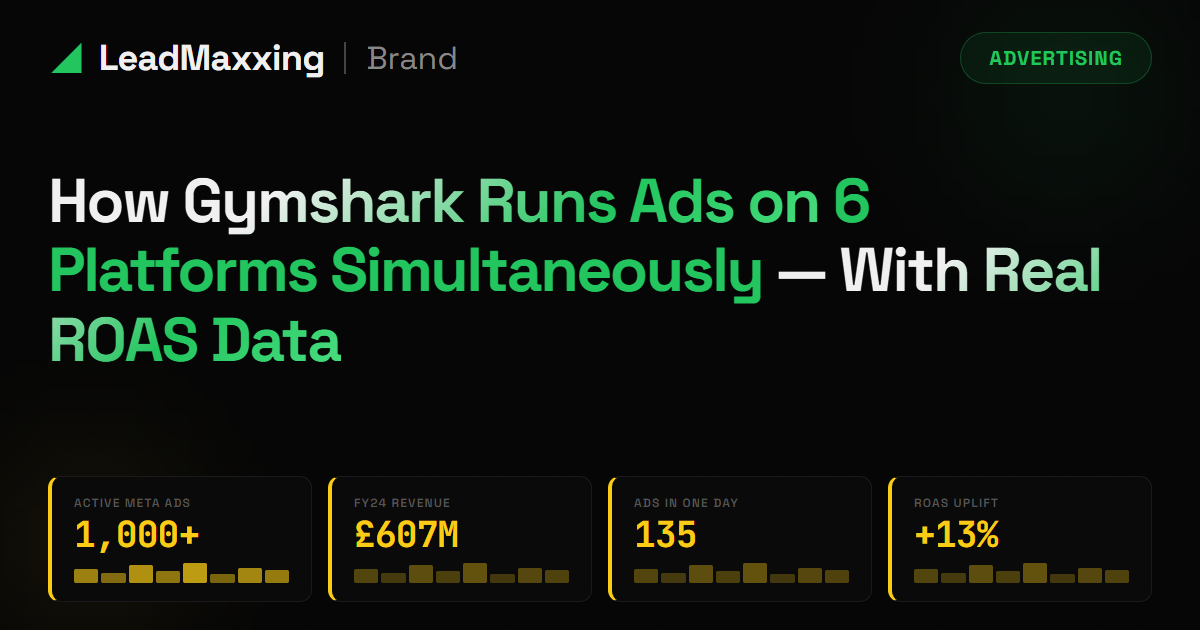
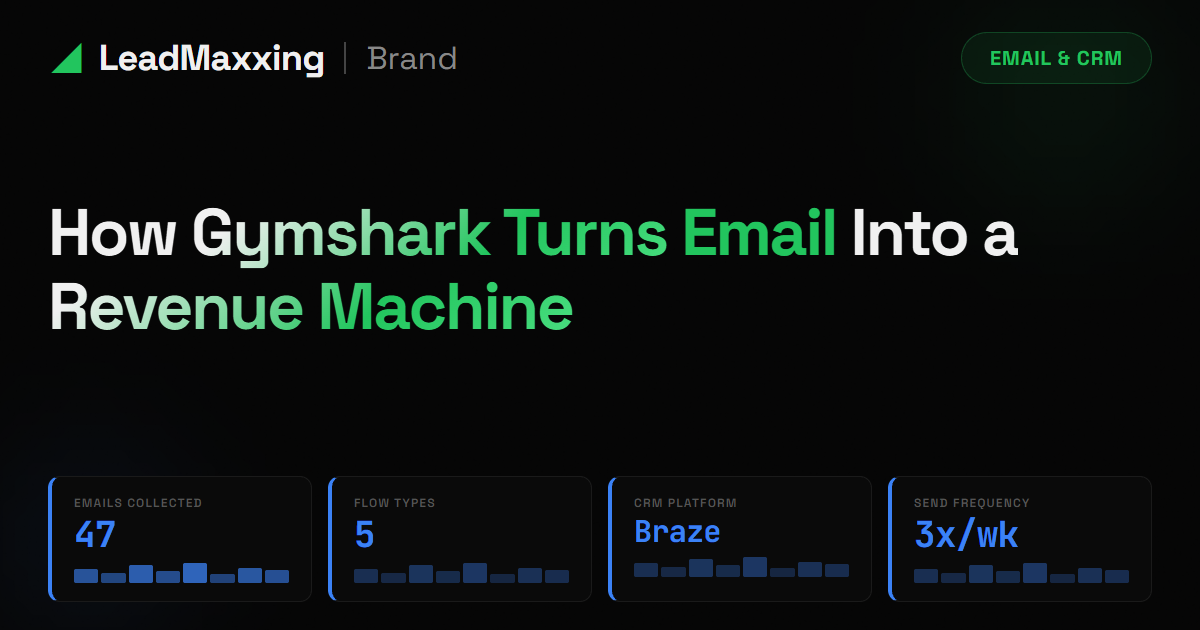
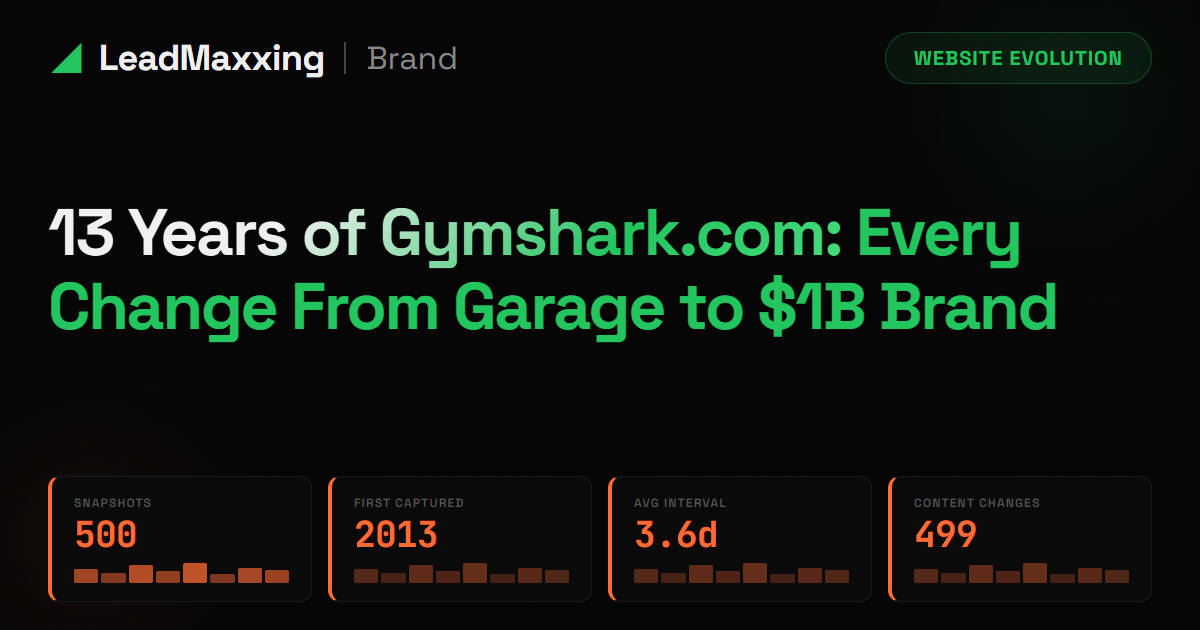
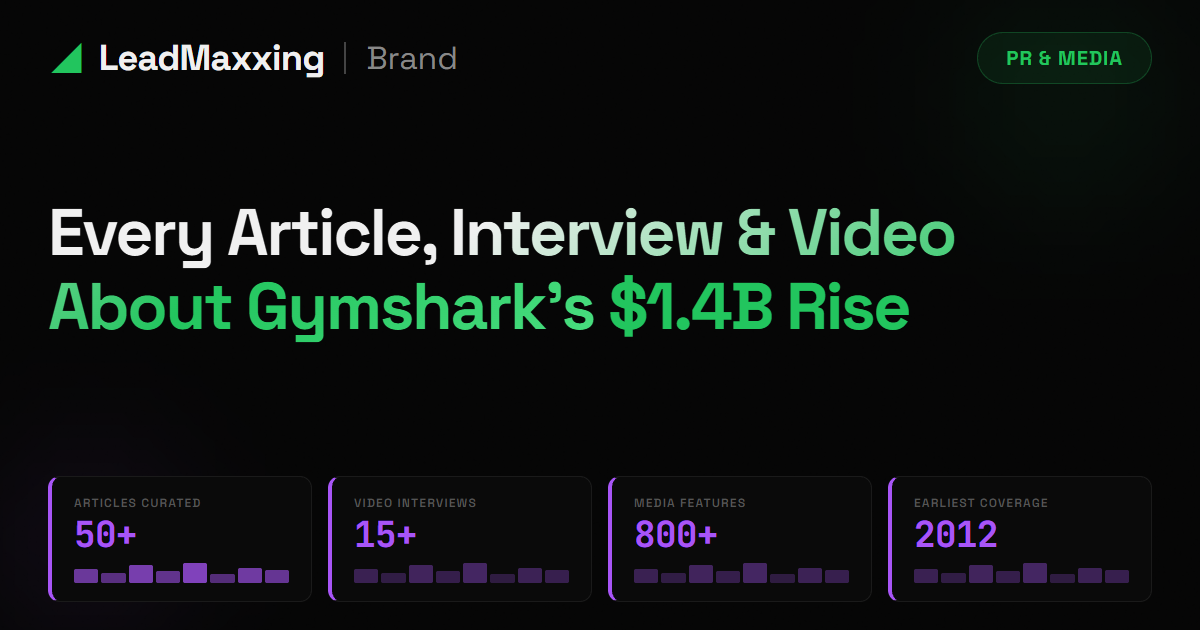
More Gymshark Intelligence
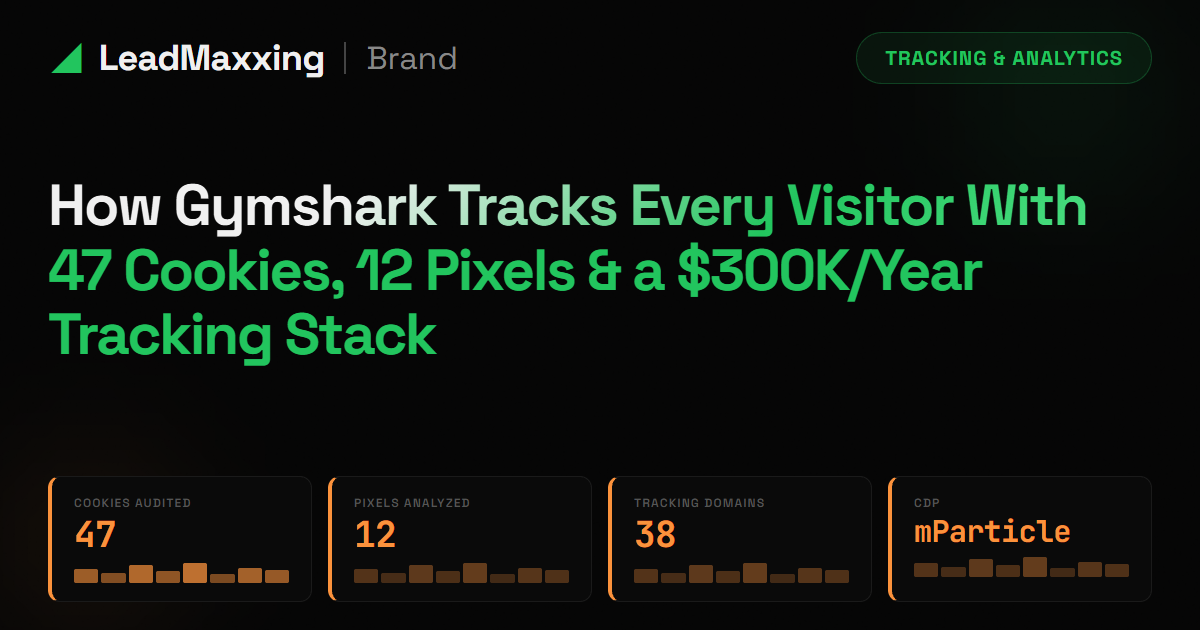
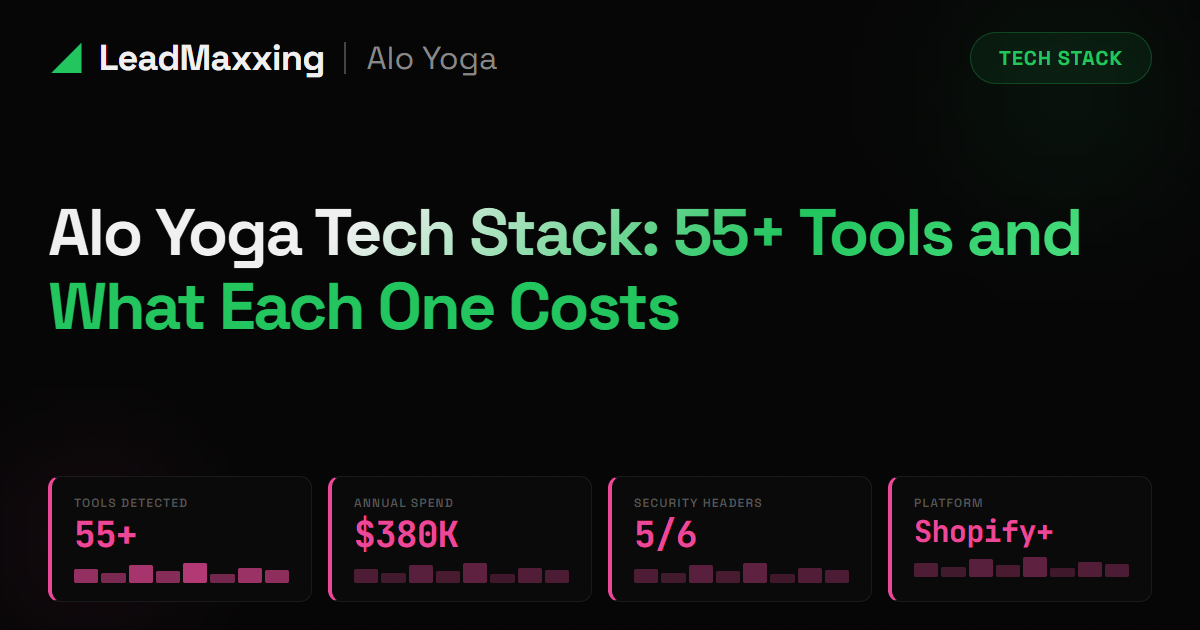
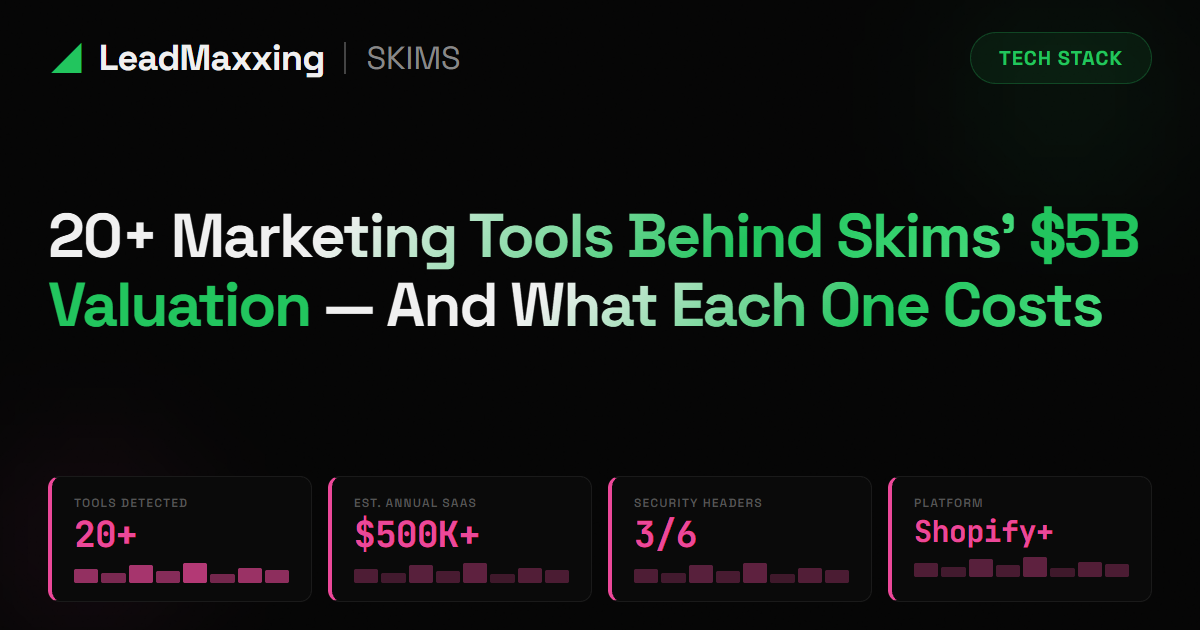
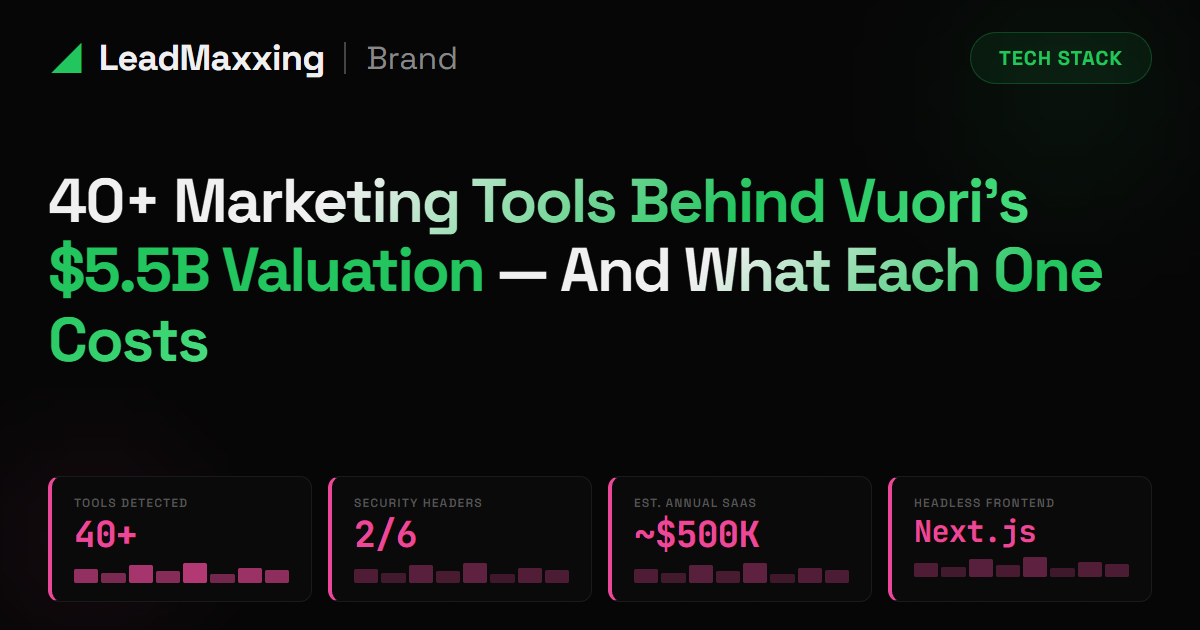
Tech Stack Audits for Similar Brands
Frequently Asked Questions
What CDN does Gymshark use?
ingress.olympus.gymsharkapps.io, which routes through CloudFront edge locations. At Gymshark's traffic volume, CloudFront alone costs an estimated $10K–$30K per month — a cost most DTC brands avoid by using Shopify's built-in CDN.What personalization tools does Gymshark use?
Does Gymshark use DynamicYield?
What is Gymshark's website security grade?
How many third-party tools are in Gymshark's CSP headers?
Does Gymshark use Google Analytics or an alternative?
What A/B testing platform does Gymshark use?
How does Gymshark's tech stack compare to Nike's?
Sources & References
curl -sI https://www.gymshark.com, revealing 60+ whitelisted external domains that map directly to active third-party tools.
developer.mozilla.org
wappalyzer.com
builtwith.com
observatory.mozilla.org
ingress.olympus.gymsharkapps.io, confirming the custom "Olympus" headless frontend routed through Amazon CloudFront.
securitytrails.com
curl -sI gymshark.com | grep -i content-security to verify. Cost estimates are based on publicly listed pricing tiers for each identified tool.